
Estimated reading time: 5 minutes
The Sensex is down today primarily due to cascading global cues, including a sharp rise in Brent crude prices past $110/barrel, escalating tensions in West Asia.
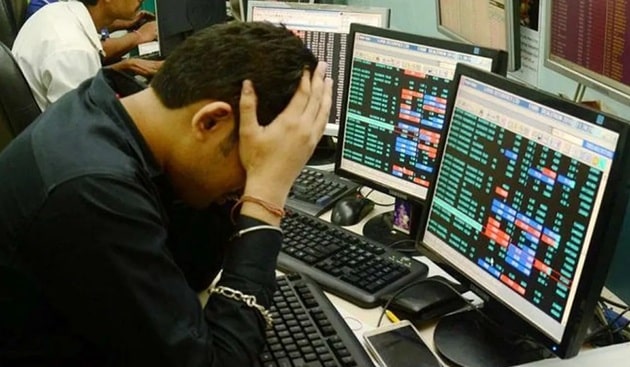
Dalal Street is witnessing a severe bloodbath today. The benchmark BSE Sensex has plummeted over 1,000 points, crashing below the 74,300 mark, while the NSE Nifty 50 has shed more than 300 points to trade under 23,350. This sudden, aggressive sell-off has wiped out nearly ₹7 lakh crore of investor wealth in a single session.
If you are wondering why Indian stock market is down today, you are looking at a perfect storm of global energy crises, domestic currency depreciation, and surging bond yields. Read on for a comprehensive, expert breakdown of the key factors driving the Sensex down today.
Market Snapshot: Current State of Sensex & Nifty
The market’s fear gauge, India VIX, has surged over 5% to hover near the 19.78 level, indicating extreme anxiety among market participants. Barring defensive IT stocks, almost all sectoral indices have plunged deep into the red territory, with Consumer Durables, Realty, and Banking leading the losses.
| Market Index | Current Level | Point Drop | Percentage Change |
|---|---|---|---|
| BSE Sensex | 74,280 | -1,020 pts | -1.35% |
| NSE Nifty 50 | 23,340 | -315 pts | -1.33% |
| India VIX (Volatility) | 19.78 | +0.95 pts | +5.05% |
Also Read : When Does Forza Horizon 6 Come Out on Game Pass
5 Key Reasons Why Indian Stock Market Is Down Today
1. Geopolitical Friction & Escalating Global Energy Crisis
The ongoing West Asia conflict has escalated drastically into full-blown economic warfare, severely compromising vital shipping lanes like the Strait of Hormuz. With direct threats being exchanged between international superpowers, global risk appetite has evaporated. Investors are panic-selling equities and moving capital into safe-haven assets.
2. Crude Oil Shock Threatening India’s Macro Stability
As a direct result of Middle Eastern supply disruptions, Brent crude oil prices have surged past $110 per barrel. Because India imports over 80% of its crude requirements, such elevated energy pricing raises domestic inflation fears, threatens to widen the Current Account Deficit (CAD), and eats into the profit margins of sectors like aviation, paints, automobiles, and FMCG.
3. Indian Rupee Plunging to Fresh Historic Lows
The Indian Rupee (INR) has tumbled past the critical psychological barrier of 96 per US Dollar for the first time in history. A rapidly depreciating local currency triggers an automatic, vicious cycle: it increases corporate import bills and forces foreign institutional investors to liquidate Indian stocks to limit dollar-conversion losses.
4. Surging US and Global Bond Yields
The US 10-year treasury bond yield has spiked aggressively to 4.62%. When risk-free yields in the United States reach these levels, emerging markets like India immediately lose their comparative premium advantage. Capital naturally flies out of volatile equities and heads back to secure US fixed-income products.
5. Aggressive and Unrelenting FII Outflows
Foreign Institutional Investors (FIIs) have turned into relentless net sellers on Dalal Street. Driven by strict risk-off sentiment and a valuation reset phase in domestic large-cap stocks, institutional funds have pulled billions out of Indian financial and consumer durable shares over consecutive trading weeks.
Expert Insights: Dr. V.K. Vijayakumar (Chief Investment Strategist)
“The market is facing intense structural pressure from severe twin headwinds. The spike in Brent crude over $110 per barrel severely threatens macro stability, while the US 10-year bond yield at 4.62% is drawing global capital back to safe havens. Investors must recognize that Indian equities are undergoing a healthy valuation reset. Instead of catching a falling knife, wealth preservation should be the priority right now.”
Sector Performance Breakdown Today
The sell-off has left very few safe corners in the market. Here is a granular view of how major sectors have performed during today’s trading crash:
- Nifty Financial Services & Banking: Slipped over 1.2% as new RBI foreign exposure guidelines compress treasury income expectations.
- Nifty Consumer Durables: The worst hit sector, plunging over 2.5% due to fears of raw material cost escalation and structural retail inflation.
- Nifty Auto & Realty: Dropped 1.8% on projections of prolonged high interest rates and fuel price hikes impacting immediate demand.
- Nifty IT: Up 0.4% — acting as the lone defensive buffer as a weaker rupee boosts revenue projections for software exporters.
🛡️ Actionable Strategy for Retail Investors
Panic selling during a market crash is often a losing strategy. Consider these three balanced tactical approaches during this correction:
- Avoid Averaging Low-Quality Stocks: Do not buy speculative shares just because they have dropped 20%. Stick to debt-free, cash-rich large caps.
- Continue Your Mutual Fund SIPs: Market drawdowns let your systematic investment plans accumulate more units at a lower cost, balancing your long-term purchase price.
- Maintain Higher Cash Balance: Keep emergency liquidity ready to acquire high-conviction quality stocks once technical indicators show definitive signs of structural stabilization.
Want to analyze which stocks are showing strong structural delivery volumes despite the crash?
Check Real-Time Top Losers & GainersFrequently Asked Questions (FAQs)
Q1: Why is the Sensex down today?
The Sensex is down today primarily due to cascading global cues, including a sharp rise in Brent crude prices past $110/barrel, escalating tensions in West Asia, a record lifetime low for the Indian Rupee against the dollar, and relentless fund selling by Foreign Institutional Investors (FIIs).
Q2: How much investor wealth was wiped out in today’s stock market crash?
The intense single-session sell-off dragged the total market capitalization of BSE-listed companies down to approximately ₹454 lakh crore, effectively wiping out nearly ₹7 lakh crore of equity wealth.
Q3: Why are rising US bond yields bad for the Indian stock market?
When US 10-year treasury yields surge (currently at 4.62%), international institutional investors pull money out of volatile emerging equity markets like India to earn a guaranteed, risk-free return in the US, triggering sharp domestic market corrections.
Q4: Should I stop my equity SIPs because the share market is falling?
No. Long-term investors should ideally continue their systematic investment plans (SIPs). Market corrections allow your fixed monthly allocation to purchase more equity mutual fund units at lower net asset values (NAV), utilizing rupee cost averaging to maximize long-term compound growth.


Pingback: Comix Http Error | How to Fix it - Tech Tips, Guides and Support